Minimalism (Themes & Movements)

CHEAP,Discount,Buy,Sale,Bestsellers,Good,For,REVIEW, Minimalism (Themes & Movements),Wholesale,Promotions,Shopping,Shipping,Minimalism (Themes & Movements),BestSelling,Off,Savings,Gifts,Cool,Hot,Top,Sellers,Overview,Specifications,Feature,on sale,Minimalism (Themes & Movements) Minimalism (Themes & Movements)

Minimalism (Themes & Movements) Overview
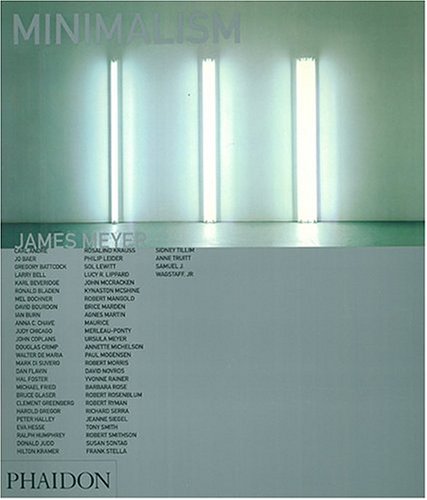
The term Minimalism was coined to describe the work of a group of American artists who, in the 1960s, produced a decidedly unexpressionistic, reductive work with a hard industrial feel. While numerous minimalist painters exist, among them Robert Ryman, Robert Mangold and Brice Marden, most of the key Minimalists - Andre, Flavin Judd, LeWitt and Morris - produced sculptures or, as some put it, 'specific objects' or 'objects in a world of objects'. Although none of the artists actually accepted the term 'Minimalism', their common use of serial, modular or repeating forms (from Carl Andre's floor sculptures of readymade bricks or Judd's stacked boxes), as well as the abstraction and industrial production of the work, drew these artists' work together. These artists' aim was to create an art that was non-hierarchical (no single part of the work takes precedence of any other) and thus democratic. In his introductory Survey, James Meyer explains the key characteristics and issues involved in this much-debated movement, while the extensive images in the Works section, with explanatory commentary, illustrate the surprising variety in the work and offer a view of the many artists also associated with Minimalism, among them Eva Hesse, Frank Stella, Anne Truitt, Robert Smithson and Agnes Martin. With direct access to many of the artists' archives, never-before-published material and texts which first appeared in little-known or out-of print catalogues, this book is the most comprehensive and definitive sourcebook on Minimalism available.
Minimalism (Themes & Movements) Specifications
For more than 20 years, Gregory Battcock's Minimal Art: A Critical Anthology has been the book on this deceptively simple approach to art-making, which sought to remove any trace of the artist's hand or emotion from the work. (Detractors naturally found it ludicrous that such reductive sculpture, often consisting of no more than a few basic modular units attached to the wall or placed on the floor, generated such a voluminous and dense stream of critical analysis, beginning in the mid-1960s.)
Part of Phaidon's Themes and Movements series, Minimalism offers the first straightforward and useful summary of the output and outlook of the artists associated with minimalism in its heyday, as well as its subsequent development into more nuanced visual forms and its relationship to postmodernism. Editor James Meyer is a specialist who has written extensively on Carl Andre, Donald Judd, Dan Flavin, and Sol LeWitt, four of the seminal minimalists (the fifth is Robert Morris). Despite the intellectual thorniness of this art, Meyer avoids the turgidity that marks much of the writing associated with it.
Tracing the origins of minimalism primarily to Frank Stella's "Black Paintings" of 1959, Meyer outlines the shifting, often warring definitions of this new kind of art. Once sculptors Andre and Judd had made their mark, there was doubt that painters could be minimalists. Brice Marden and Robert Ryman made the cut because their work was believed to be purely about the process of painting. Interestingly, although this was overwhelmingly a male club, curators also initially embraced the work of several women artists (including Agnes Martin and Anne Truitt) who retained such minimalist no-noes as irregular, handmade marks, color that could be perceived independently of form, and a belief in transcendent meaning.
The 141 pages of color and black-and-white photographs (including rare glimpses of early work by some artists) and a generous assembly of texts by such key commentators as Michael Fried, Barbara Rose, Rosalind Krauss, and the artists themselves (including previously unpublished or hard-to-find material) make this volume indispensable for anyone seriously interested in contemporary art. --Cathy Curtis
